

Pick up the phone and have the conversation.
Margaret had been holding onto it for fifteen years—the sharp words exchanged with her sister Linda over their mother's care, the silence that followed, the birthdays and holidays that passed without a phone call. At seventy-two, Margaret found herself in a hospital bed after a minor heart procedure, and all she could think about was Linda. Not the argument. Not who was right. Just Linda's laugh, the way they used to finish each other's sentences, the hole that had been sitting in her chest for a decade and a half.
She asked her daughter to find Linda's number.
When Linda answered, Margaret didn't apologize first. She didn't explain or justify. She simply said, "I miss you. And I don't want to waste whatever time we have left being angry about something that happened when we were both exhausted and scared."
Linda was quiet for a moment. Then: "I've picked up the phone to call you a hundred times."
They talked for two hours that day. They didn't resolve everything—some wounds are too old to heal completely—but they found something better than resolution. They found peace. They found a path forward. They found meaningful closure on a chapter that had defined too much of their lives, and they opened a new one together.
Table of Contents
The Weight We Carry
Most of us are walking around with unfinished business. It sits in our chest like a stone, that relationship that ended badly, that conversation we never had, that person we hurt or who hurt us. We tell ourselves it's in the past, that time heals all wounds, that it doesn't matter anymore.
But our bodies know differently.
Research from the American Psychological Association reveals that unresolved conflict and lack of closure significantly impact both mental and physical health. A comprehensive study published in the Journal of Personality and Social Psychology found that people who lack closure in important relationships experience higher levels of rumination, anxiety, and depression. They literally cannot stop thinking about what wasn't said, what wasn't done, what might have been.
The physical toll is equally striking. According to research from Harvard Medical School, chronic stress from unresolved relationships contributes to elevated cortisol levels, weakened immune function, increased inflammation, and higher risk of cardiovascular disease. Our bodies keep the score of every goodbye we never got to say, every apology we never offered or received, every relationship left in limbo.
For Baby Boomers facing mortality with greater immediacy, this weight becomes heavier.
For GenX, watching parents age while carrying their own unresolved conflicts, the burden is double—their own relationships and the model they're setting for their children.
Dr. Nancy Kalish, a psychology professor who has studied reconciliation for decades, notes that the regret of not attempting closure often outweighs the discomfort of the attempt itself. In her research, individuals who reached out to estranged family members—even when the reconciliation was imperfect—reported significantly lower levels of regret and higher psychological well-being than those who chose to wait.


A Father-Son Tale
Tom is fifty-six now, and his father has been dead for three years. They'd had a falling out over Tom's divorce—his father, traditional to the core, couldn't accept that Tom was leaving his wife, couldn't understand that staying would have been worse for everyone, including the grandchildren. They'd exchanged maybe a dozen stiff conversations in eight years. Tom kept meaning to really talk to him, to bridge that gap, to explain himself better or maybe just to say that he didn't need his father to understand, just to love him anyway.
But there was always time. Until there wasn't.
His father died suddenly—a massive stroke on a Tuesday morning. Tom got the call at work. And in the aftermath, amid the funeral arrangements and the relatives and the well-meaning platitudes, Tom felt something crack inside him. Not just grief, but a specific, jagged kind of pain that had no outlet. He'd never get to have that conversation. He'd never know if his father might have softened, might have come around, might have reached back if Tom had reached out more persistently.
Three years later, Tom still catches himself rehearsing what he would have said. He dreams about his father and wakes up with his heart racing. He overcompensates with his own adult children, terrified of any distance between them, sometimes smothering them with his need for connection. The lack of closure didn't just end a relationship—it infected all his other ones.
Tom's therapist once asked him: "What would you give to have one honest conversation with your father?"
Tom didn't hesitate. "Anything."
Why Meaningful Closure Matters
Closure isn't about neat endings or perfect reconciliation. It's not about forgiveness if forgiveness isn't possible, and it's not about forgetting or pretending the hurt never happened. Meaningful closure is about acknowledging what was, accepting what is, and releasing what no longer serves us.
It's the difference between an open wound and a scar. Both carry the history, but only one continues to bleed.
For Boomers, meaningful closure before the end of life is a gift—to themselves and to those they love. It's the chance to say what matters, to heal what can be healed, to ensure that the legacy they leave isn't just material but emotional and spiritual. Research from Stanford University's Center on Longevity shows that individuals who actively seek closure in their later years report higher life satisfaction and lower death anxiety.
For GenX, initiating these conversations with aging parents or estranged siblings is equally critical. You're not just healing your own relationships—you're modeling emotional courage for your children. You're breaking generational patterns of silence and stubbornness. You're choosing connection over pride.
And here's the truth that's hard to swallow: waiting for the other person to go first is a losing game. Waiting for them to apologize, to reach out, to make the first move, to prove they care—that's just ego dressed up as self-protection. The person who initiates closure isn't weak. They're brave. They're the one who decides that peace matters more than being right.

Best Friends No Longer
Jennifer, sixty-four, had a best friend for thirty years. She and Patricia did everything together—raised their kids side by side, traveled, shared secrets, weathered divorces and job losses and all the chaos that life brings. Then Patricia's son married Jennifer's niece, and the marriage was a disaster. When it ended badly, battle lines were drawn. Family loyalty demanded Jennifer take her niece's side. Patricia did the same for her son.
They stopped speaking.
Years passed. Jennifer would see Patricia's posts on social media—grandchildren, retirement, trips to Italy. She felt the loss like a phantom limb, this person who had been her person for three decades, now a stranger. Several times she started to write a message, an email, something. But what if Patricia didn't want to hear from her? What if she was still angry? What if Jennifer was intruding?
Then Jennifer's husband died unexpectedly. And in the fog of grief and funeral arrangements and learning how to be alone, she realized something: life is too short and too fragile to let pride win.
She called Patricia. Left a voicemail. "I don't know if you'll want to talk to me, but I miss you. Our kids made their choices and lived their lives, and I let that end our friendship. I don't want that to be the end of our story. If you're willing, I'd love to see you."
Patricia called back within an hour.
They met for coffee, and it was awkward at first—both of them tentative, both of them carrying years of hurt and stubbornness. But then Patricia said something that changed everything: "I've missed you every single day. I just didn't know how to come back."
They didn't reclaim what they'd lost—you can't step in the same river twice. But they built something new, something shaped by loss and forgiveness and the wisdom that comes from almost losing someone who matters. Their friendship now is deeper, more intentional, less taken for granted.
Jennifer says she thinks about those lost years sometimes, the grandchildren's birthdays they didn't share, the daily texts that stopped, all that time they can't get back. But mostly she's grateful. Grateful she called. Grateful Patricia answered. Grateful they found their way back to something that looks like home.

Why Mom?
David is fifty-three, and his mother is seventy-nine. They've always had a complicated relationship—she's critical, he's defensive, they trigger each other in ways that feel almost scripted. Over the years, he's pulled back, limiting visits to holidays, keeping conversations surface-level. It's easier that way. Less painful.
But his mother is slowing down now. Memory issues, mobility problems, the unmistakable signs that time is running out. And David realizes, with a kind of quiet horror, that if she dies tomorrow, their relationship will end exactly as it is now—strained, careful, full of things unsaid.
He doesn't want that. But he also doesn't know how to change it.
One Sunday afternoon, sitting in her living room after a lunch that featured her usual commentary about his weight and his job and his life choices, David does something he's never done before. Instead of leaving early with a tight smile, he stays. And he says, "Mom, I need to talk to you about something. Can we have a real conversation?"
She looks startled. Wary. But she nods.
"I feel like we've been dancing around each other my whole life," David says. "Like we're reading from a script—you criticize, I pull away, neither of us says what we really mean. And I don't want that to be how our story ends."
His mother is quiet for a long moment. Then, in a smaller voice than he's used to hearing from her: "I don't know how to talk to you without criticizing. It's how my mother talked to me. It's all I know."
That conversation doesn't fix everything. But it opens a door. Over the following months, they have more honest talks—about her fears of being forgotten, about his hurt from feeling never quite good enough, about the love that's always been there but got buried under years of patterns and pain.
When David's mother eventually passes, he grieves deeply. But he doesn't carry regret. He carries closure. He carries the peace of knowing they tried, they connected, they said what mattered. The relationship wasn't perfect, but it was real. And in the end, that's what meaningful closure is—accepting the imperfect reality and finding peace within it.
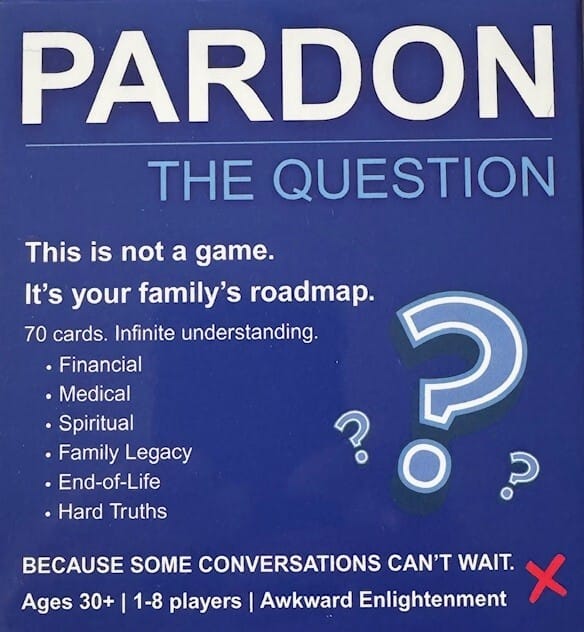
Starting the Conversation
The hardest part of meaningful closure isn't the conversation itself—it's initiating it. We're afraid of rejection, of making things worse, of looking weak or desperate. But the cost of not trying is almost always higher than the cost of trying and failing.
Here are some conversation starters that can open the door:
"I've been thinking about us, and I don't want unfinished business between us. Can we talk?"
This is direct but gentle, naming the issue without blame.
"I miss the relationship we used to have. I'd like to see if we can find our way back to something good."
This focuses on what you want to build, not what was broken.
"I know things have been difficult between us. I'm not asking you to forget what happened, but I'd like to talk about where we go from here."
This acknowledges the hurt while moving toward resolution.
"Life's too short to carry this weight. I want to clear the air, even if we don't agree on everything."
This frames closure as a mutual benefit, not just your need.
"I'm reaching out because you matter to me, and I don't want time to run out before we talk about this."
This adds appropriate urgency without being manipulative, especially relevant when dealing with aging parents.
Remember: meaningful closure doesn't require the other person to meet you exactly where you are. It requires you to be honest, vulnerable, and willing to accept whatever comes from that honesty. Sometimes closure is mutual. Sometimes it's one-sided. Sometimes it's messy and incomplete. But it's always better than the alternative—carrying that weight until it's too late to put it down.
Your Next Step
Ready to start these crucial conversations but need more guidance? We've created a comprehensive Conversation Starter Guide with specific openers for different types of relationships and situations—parents, siblings, old friends, estranged family members, and more.
Download your free guide below and take the first step toward meaningful closure today.
Because the relationships that matter most deserve better than silence. And you deserve the peace that comes from knowing you tried.


